CAVALEX 56006 - launch
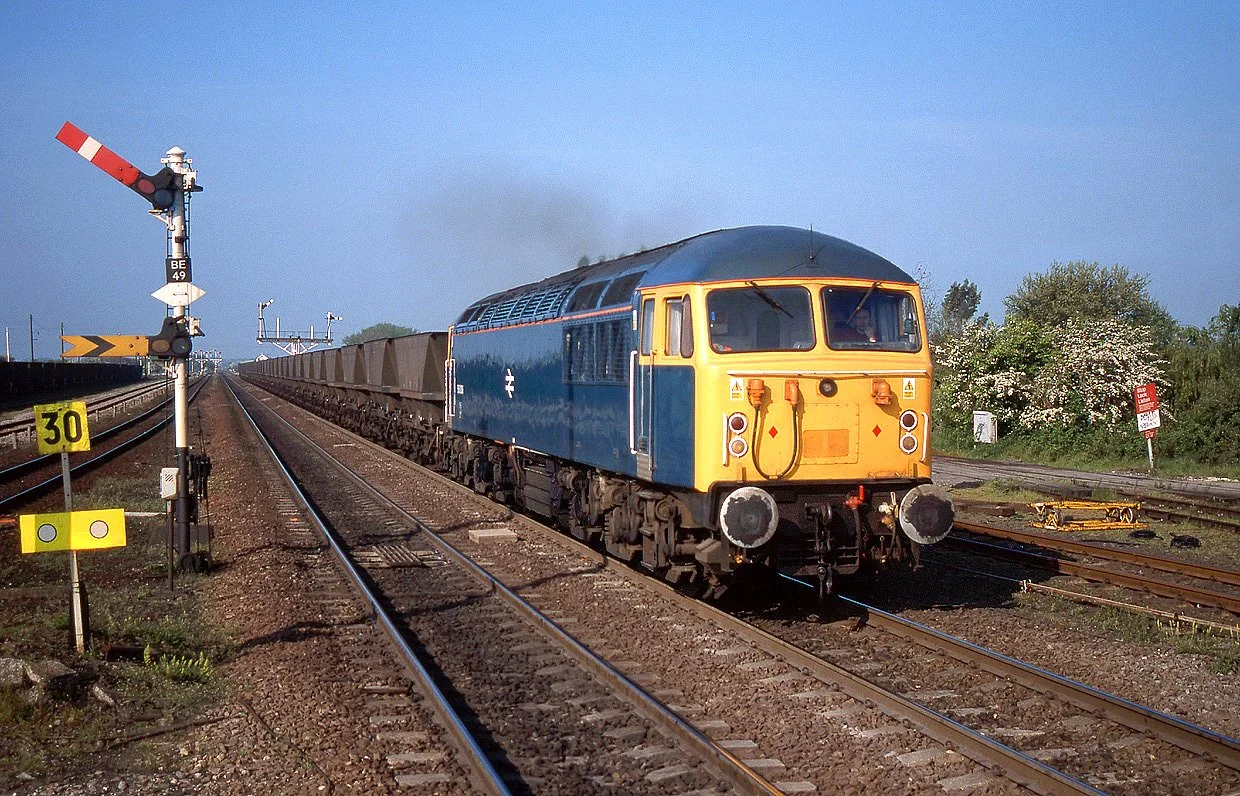
Photo courtesy Mark Few
2026 is a landmark anniversary for the Class 56 with last month marking the 50th anniversary of the first members of the Class arriving in the U.K.
Today, Cavalex Models are pleased to reveal our model of 56006 is now available for purchase.
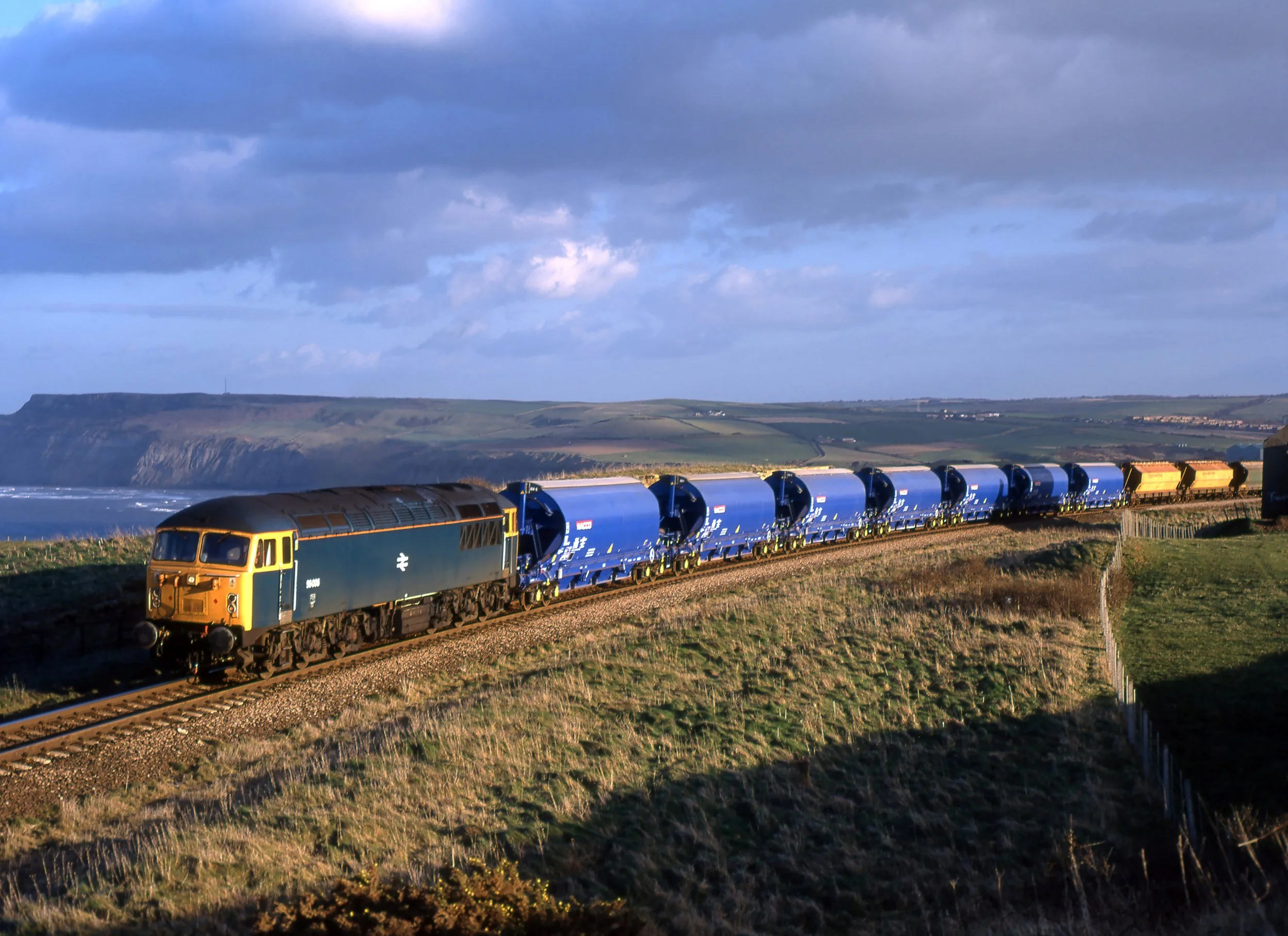
Photo courtesy Douglas Johnson
56006 History
Compiled by Jim Nisbet, based on material prepared by Alan Hawkins and Keith Bulmer (‘Grids – The Class 56 Story’ book)
56006 has a special place in the history of the Class 56 locomotives – it was the first Grid to enter service with BR in late February 1977. When BR identified the need for a new build of locomotives for coal traffic in 1974, Brush Traction was the only bidder for the initial tender for 60 locos. The urgent need for the locos’ introduction created a problem as there was no UK capability for immediate construction, so Brush outsourced the production of the first 30 locomotives to a partner they were working with in Romania; Electroputere in Craiova.
The subsequent locomotives were built at BREL Doncaster (with a portion of a follow on order built at BREL Crewe). Whilst this addressed the need to get the locos into traffic quickly, with hindsight it probably wasn’t the ideal solution given the problems which quickly emerged when the first Class 56s arrived in the UK.
The locomotives built in Romania travelled by rail across Europe to Zeebrugge where they were loaded on to the train ferry to Harwich, before being hauled to Tinsley Depot for commissioning ahead of entry into service. The first two locomotives arrived at Zeebrugge in August 1976, with 56006 in the third batch reaching the Belgian port on 8 September. Rectification of the defects affecting the first locomotives to be delivered took six months, which meant it wasn’t until 25 February 1977 that BR finally accepted 56006 into traffic. Given that the first Doncaster built example, 56031, entered traffic three months later, the decision to subcontract the work abroad to help speed the introduction into service seems shortsighted!
Initially based at Tinsley (as were all the Romanian built locos) the early work for 56006 was exactly what it had been built for, merry-go-round operations taking coal from collieries to power stations. At that time there was an extensive network of mines in South Yorkshire feeding power stations such as Ferrybridge, Eggborough and Drax. And the association with that traffic was recognised in January 1995 when 56006 received the name “Ferrybridge C Power Station”.
Whilst MGR traffic was the bread and butter of 56006’s duties, it has been called on to haul passenger services on several occasions, usually ‘drags’ under the wires when the electric power was switched off for engineering purposes. The first recorded instance of this was in June 1981 between Birmingham New Street and Nuneaton. The loco has also put in appearances on railtours: on the ‘Cattal Grid’ in 1995 between York and Newcastle, the ‘Marching Cat’ in 1997 between Ipswich and Felixstowe and the ‘Desert Mule’ in 2002 between Paddington and Westbury.
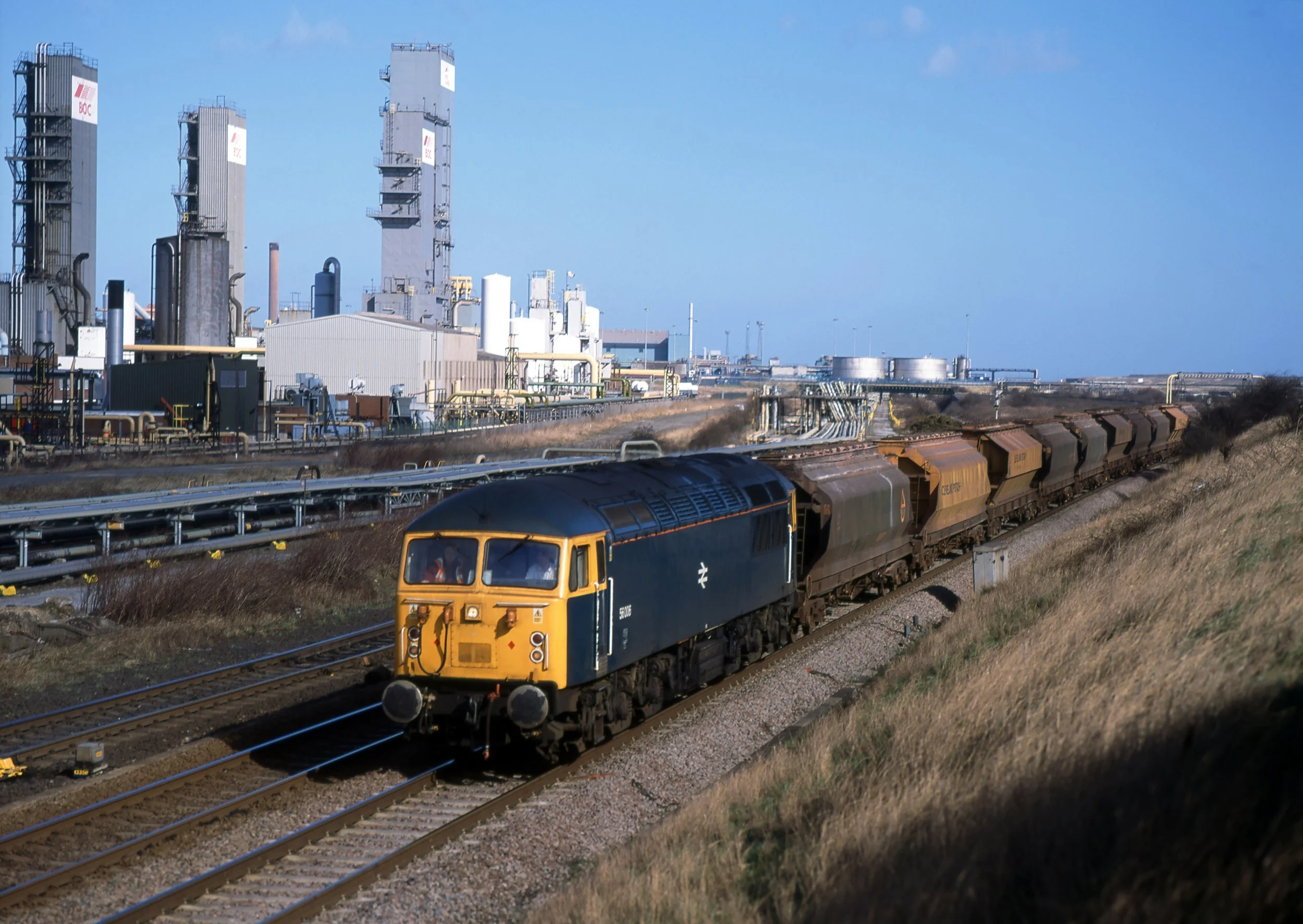
Photo courtesy Douglas Johnson
Over the course of its career 56006 has carried a number of the liveries which were applied to the Class. Starting out in BR Blue, it then appeared in original Railfreight grey livery, followed by triple grey with coal sub-sector branding, then into Loadhaul livery before returning to BR Blue livery in August 1999. The return to the original colour scheme heralded the locomotive’s selection as a participant in the ‘EWS Classic Traction Event’ at the East Lancashire Railway in September 1999. Following this event 56006 joined a number of other EWS locomotives in a ‘heritage pool’ celebrating the history of locomotive classes which the company had inherited. In its celebrity role 56006 became an ambassador for the Class 56s in their declining years, appearing at events and helping to maintain interest in Grids. Withdrawal came in December 2003, just a few months before EWS dispensed with its remaining Class 56s in March 2004.
Following withdrawal by EWS 56006 attended an event at Barrow Hill, and after remaining there for a few years was bought by the Class 56 Group in November 2012. After an interlude at UKRL’s Leicester Depot, 56006 moved to the East Lancashire Railway, where it is being cared for by a team of Class 56 Group volunteers to make sure it can continue to carry the torch as the only preserved Class 56 locomotive. Renewed interest and enthusiasm has seen 56006 gradually return to traffic at the East Lancs after a period out of service, although there is always plenty to do on a complicated beast like the Class 56 which doesn’t see the sort of daily running there was in BR days to keep things running smoothly. Nevertheless as 56006’s 50th anniversary approaches the Class 56 Group is confident that the locomotive will be at the forefront of generating enthusiasm for Grids for years to come – and this model plays an important role in celebrating our locomotive’s past, present and future.
THE CLASS 56 GROUP
The Class 56 Group was formed in 1992 with the aim catering for people who are interested in the Class 56 locomotives and wanted to see one or more of these fine locomotives preserved for future generations to enjoy. The Group has been able to do this so far through ownership of three Grids over the years – 56040, 56301 and 56006. Now we are down to just 56006 to which we can devote our entire energies to ensure we can highlight the place the Class 56 has in British railway history. New members are always welcome, and you can find us on the web at www.class56group.co.uk.
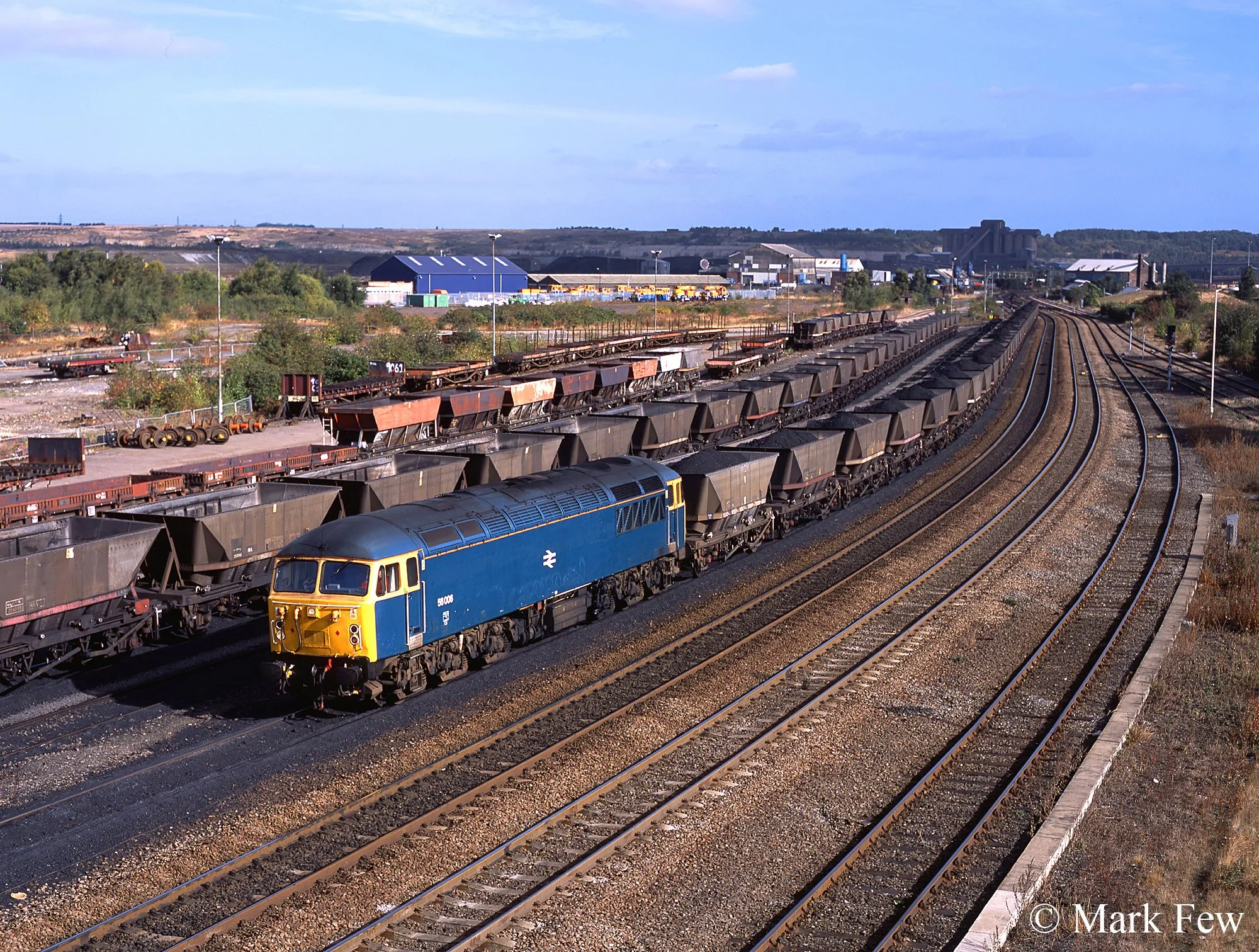
Photo courtesy Mark Few
THE CAVALEX 56006
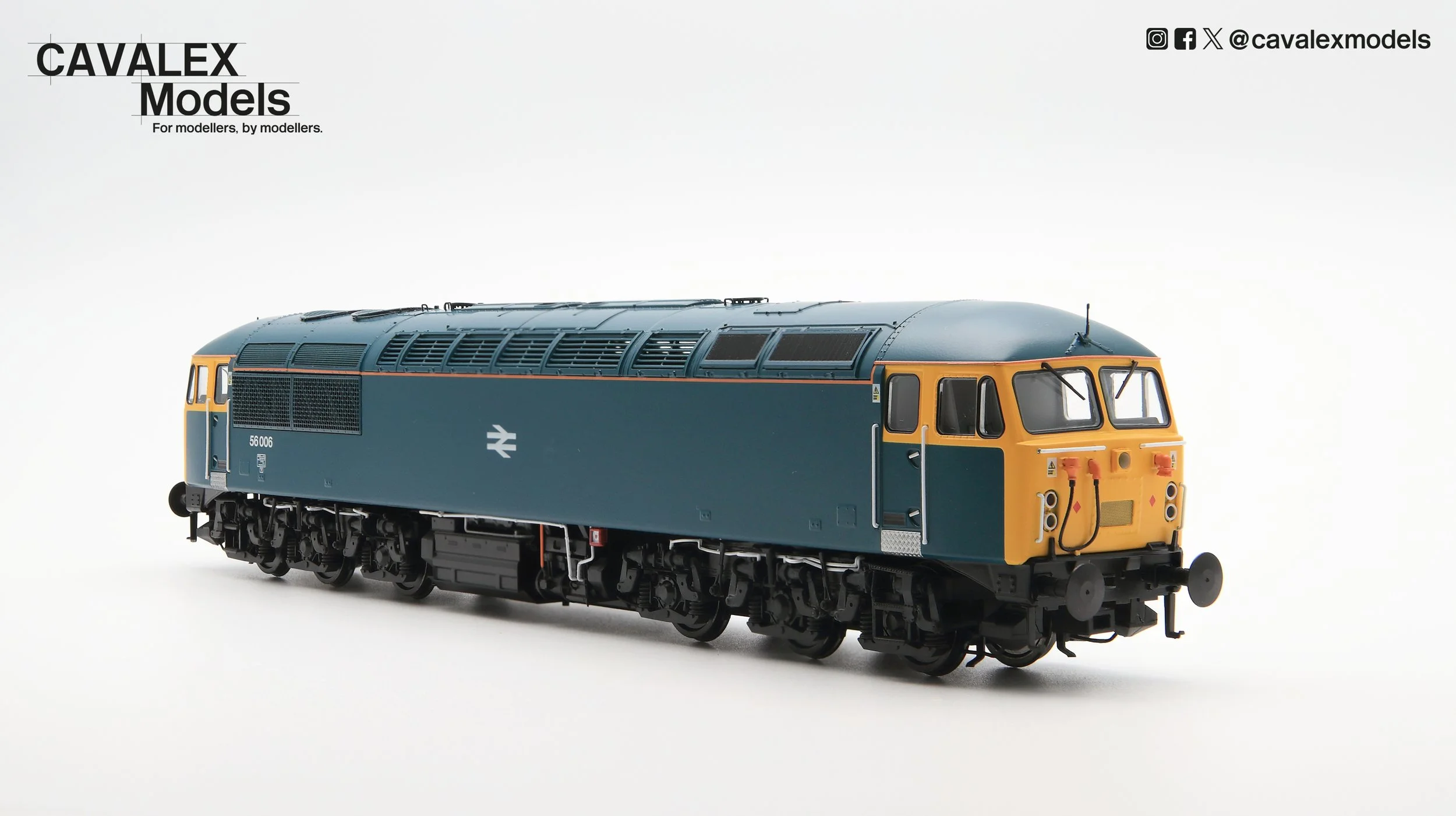
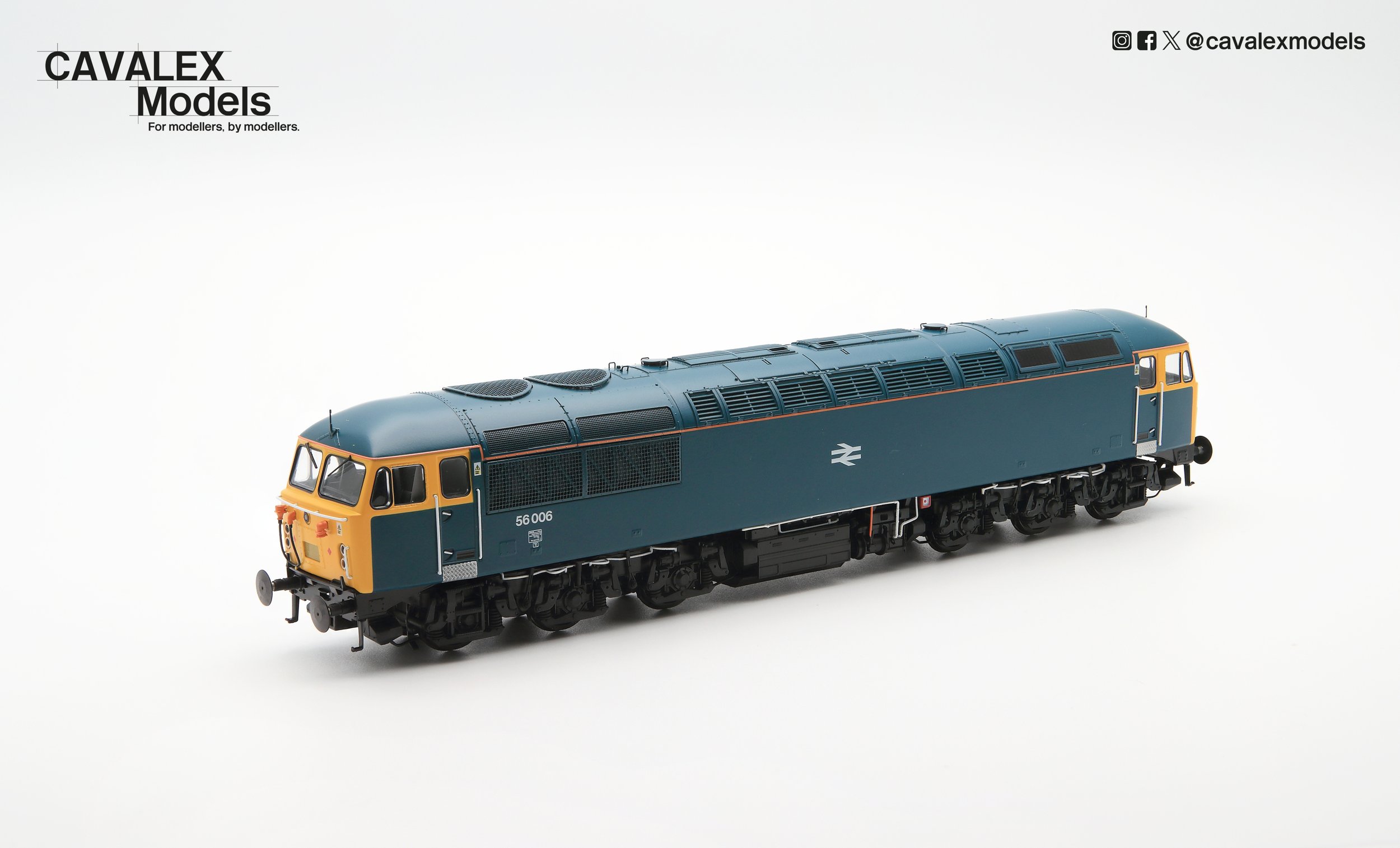
The Cavalex 56006 is the final model of the second production run that arrived earlier this year and is in stock and available to purchase through Rainbow Railways, see below link to their website:
Cavalex Models 56006 - DCC Ready
Cavalex Models 56006 - DCC Sound
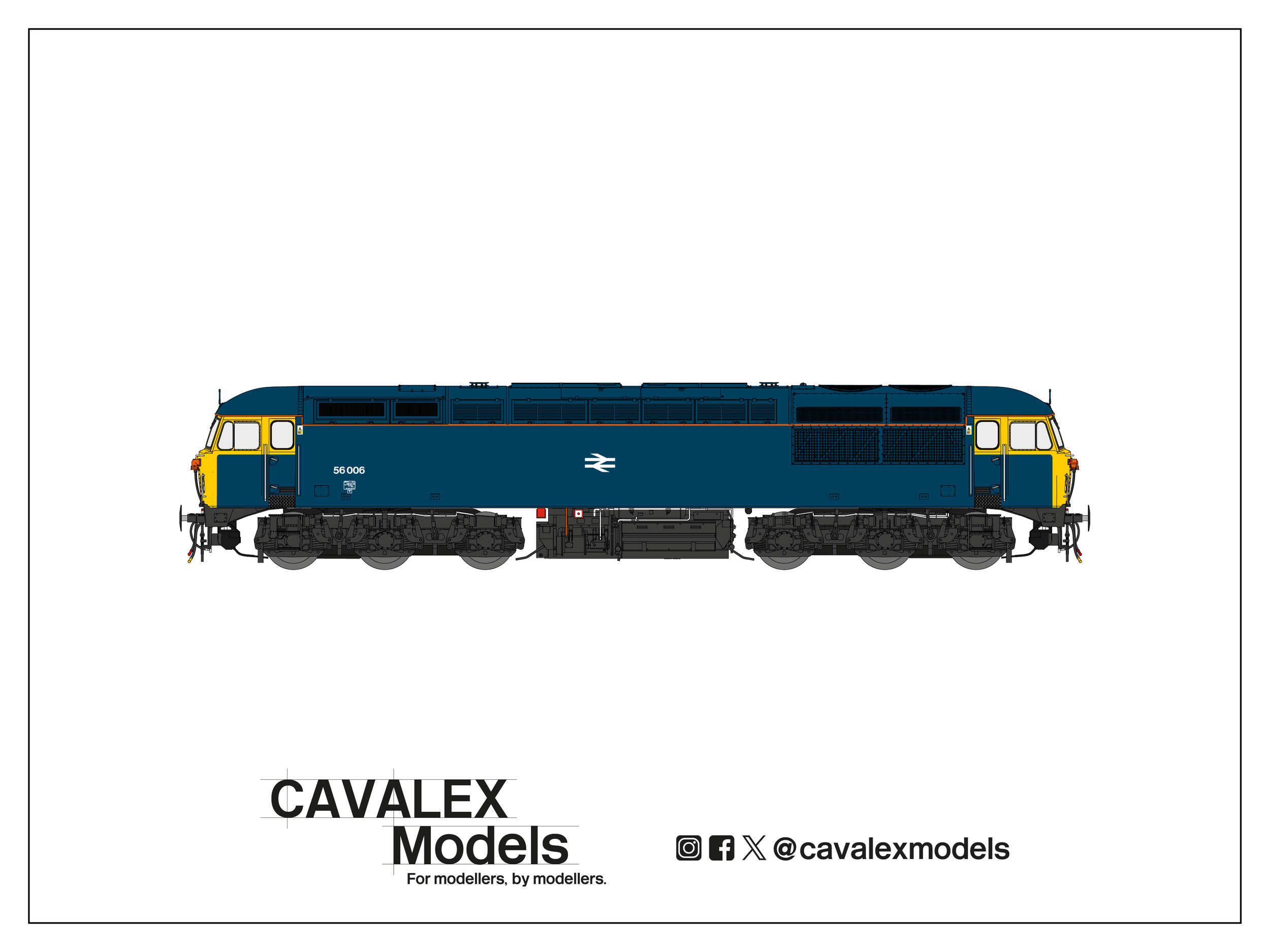
The model depicts 56006 in B.R. blue as painted by EWS during its final years of service in the early 2000s.
There will be a limited number of models available to buy at the East Lancashire Railway Diesel Gala at the weekend.
Our thanks to The Class 56 Group and Rainbow Railways for their help and support with this project.